
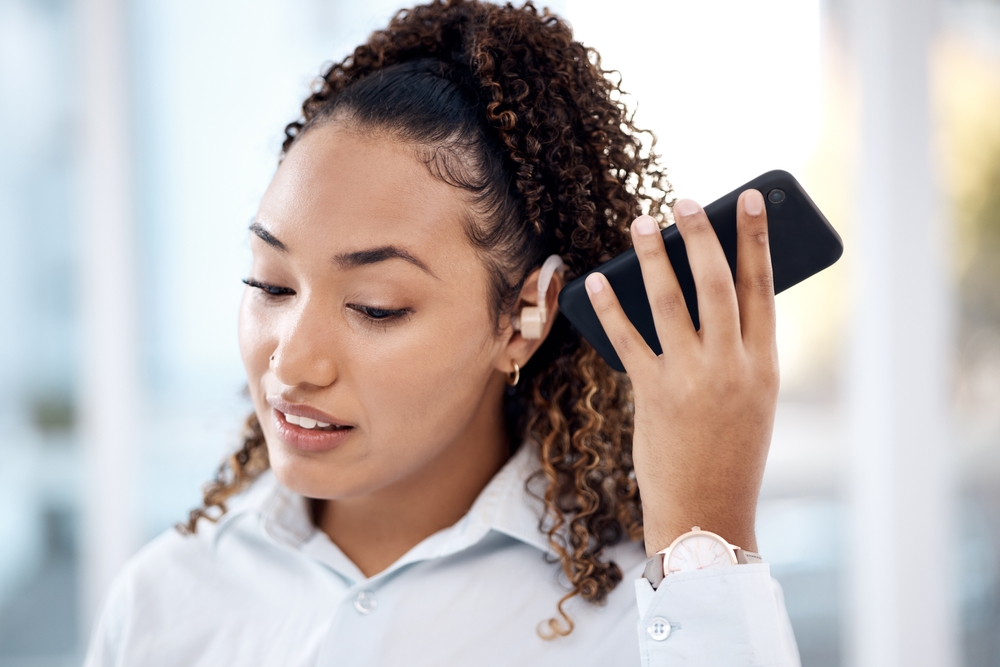
You can hear the person across the table, but following what they are saying is another matter. Between nearby conversations, music, and dishes clattering, dinner can become an exercise in filling in the blanks.
That is one reason AI hearing aids attract so much attention. These devices may help manage changing listening conditions, but choosing one still requires more than picking the newest processor or longest battery life. Your hearing loss, communication goals, comfort, and budget should lead the decision.
For people comparing AI hearing aids near McLean, Tysons Corner, or Arlington, VA, ENT & Facial Plastic Surgery offers a starting point through personalized hearing aid evaluations and recommendations at its McLean office. This guide explains what to ask about speech clarity, rechargeable technology, connectivity, and total cost.
What Makes a Hearing Aid an AI Hearing Aid
The phrase “AI hearing aid” generally describes devices that use machine learning or related processing to recognize sound patterns and adapt how sound is delivered. Some systems classify listening environments; others use neural networks to help distinguish speech from competing noise.
For example, Phonak describes AI processing that analyzes changing environments and adjusts automatically. The exact capabilities depend on the model and technology level.
AI is not a separate category of hearing loss treatment, and the label alone does not establish that one device is better for you. Ask which specific feature is being recommended, what listening problem it addresses, and how its benefit will be assessed.
Automatic processing also does not mean you will never need an adjustment. Tell your audiologist what you notice in everyday situations so the fitting can be reviewed.
Can AI Hearing Aids Help You Hear in Restaurants and Crowded Places
Restaurants bring together several challenges: overlapping voices, distance from the speaker, and background sound that changes throughout the meal. Simply making everything louder may not solve the problem.
AI-based speech processing, directional microphones, and noise management can help some wearers follow conversation more comfortably. The relevant question is how well a proposed device supports your particular listening needs, rather than how impressive its headline specification sounds.
A manufacturer’s noise-reduction figure and another company’s speech-understanding percentage may measure different outcomes under different conditions. They should not be treated as a universal ranking or a prediction of your results.
The FDA’s guide to hearing aid benefits and limitations is a useful reminder that hearing aids have limits. They do not restore normal hearing or eliminate every distracting sound.
Bring Real Listening Goals to Your Appointment
Instead of asking only for the “best hearing aid for noise,” describe the conversations you want to improve:
- Following your partner across a restaurant table.
- Keeping up when several relatives take turns speaking.
- Hearing coworkers during meetings.
- Understanding someone speaking from the side.
- Moving between a quiet home and busier social settings.
Ask whether speech-in-noise testing, a demonstration, or an appropriate trial can help evaluate the recommendation. Also discuss whether a remote microphone or other accessory would be useful for a specific setting.
The aim is a practical comparison: what can you understand, how comfortable does it feel, and what still needs attention?
Are AI Hearing Aids Worth the Money
They may be, particularly when the additional features address situations that regularly cause difficulty. Someone who attends group meetings and eats in busy restaurants may have different priorities from someone who mainly wants clearer conversation at home.
That does not mean premium technology is automatically necessary for an active person or unnecessary for someone with a quieter routine. Consider your hearing assessment and daily demands together.
A useful value discussion compares a recommended model with a less expensive suitable option. Ask what you would gain, what you would give up, and whether the difference is likely to matter in your life.
The National Institute on Deafness and Other Communication Disorders explains that hearing aid selection depends on the type and severity of hearing loss, along with individual needs. Price alone does not identify the right device.
How Much Do AI Hearing Aids Cost Near Tysons Corner and McLean
There is no single price for an AI hearing aid. A quote may cover one device or a pair, and may include a different level of clinical care from another seller’s offer.
For accurate AI hearing aid pricing near Tysons Corner, request a personalized estimate from ENT & Facial Plastic Surgery. Confirm the exact model, technology tier, and included services rather than assuming an online starting price represents the practice’s fees.
What Can Affect Your Quote
- Device model and technology tier. Different options within a product family may have different features and prices.
- One hearing aid or two. Confirm whether the amount quoted is per ear or for a pair.
- Included clinical care. Ask about fitting, programming, follow-up adjustments, and hearing aid checks.
- Earmolds and accessories. Clarify whether custom components, a charger, or optional microphones cost extra.
- Warranty and repair terms. Ask about coverage length, loss and damage provisions, and any applicable fees.
- Trial and return policy. Request the time limit, return conditions, and any nonrefundable charges in writing.
- Insurance benefits. Verify coverage with your insurer and the practice before assuming a benefit applies.
These questions make it easier to compare equivalent options. A lower device-only price and a quote that includes ongoing care represent different purchases.
Ask About the Cost of Ownership
The initial payment is only part of the comparison. Ask what cleaning supplies, future service, repairs outside the warranty, and battery servicing may cost.
If financing is offered, review the total payment obligation and terms. A monthly amount can help with budgeting, but you should also understand the complete purchase price.
Bring your budget to the appointment. It gives your audiologist a clear basis for discussing priorities and suitable alternatives.
Rechargeable AI Hearing Aids and Battery Life
Rechargeable models can simplify daily handling by reducing the need to replace small disposable batteries. However, a useful battery comparison needs to reflect how you plan to use the device.
For example, Starkey advertises up to 51 hours of battery life for Edge AI. That is a manufacturer maximum, not a promise for every style, setting, or wearer. Confirm the details for the exact device being considered.
Ask your audiologist:
- How long should this model run with my expected amount of streaming?
- How long does a full charge take?
- Does the charger require an outlet, or can it recharge devices while traveling?
- Is a portable charging case included?
- What happens if the rechargeable battery needs service?
- Can I comfortably insert and remove the devices from the charger?
A device that meets your daily routine and is easy to handle may be more useful than one with a higher advertised maximum. Try the charger yourself before deciding.
Bluetooth Streaming and Smartphone Compatibility
Bluetooth can support calls, streamed audio, and app controls, but the available functions vary by hearing aid and phone. “Bluetooth compatible” does not automatically mean every feature will work with every smartphone.
Bring your phone to the evaluation and ask the team to check the exact model and operating system. If calls are important, clarify whether hands-free calling is supported and whether an accessory is needed.
Ask separately about television audio, computer meetings, and app use. The connection that works for a phone may not answer every other need.
Some devices also support newer broadcast-audio features such as Auracast. If that matters to you, confirm both hearing aid compatibility and availability in the venues you use. A feature is most valuable when it solves a problem you actually encounter.
Prescription Hearing Aids and Over the Counter Options
Over-the-counter hearing aids may be an option for adults aged 18 and older with perceived mild to moderate hearing loss. Prescription devices can address a broader range of hearing needs. The FDA explains the differences between hearing aid categories, including how they are purchased and who they are intended to help.
The degree of hearing loss does not, by itself, determine which premium features you need. Required amplification, device style, speech-processing options, and professional support are related considerations rather than interchangeable ones.
If you are unsure which route fits your needs, an evaluation can provide a clearer starting point than shopping by product label.
Start With an Audiology Evaluation in McLean
Difficulty understanding speech deserves an assessment before a device recommendation. An ENT clinician can evaluate possible medically treatable causes, while an audiologist determines the type and degree of hearing loss.
At ENT & Facial Plastic Surgery, audiology evaluations include care from Dr. Alice Wilson or Dr. Valerie Monks. The practice describes hearing aid consultations that consider lifestyle, preferences, dexterity, cosmetic concerns, and budget.
Bring your current hearing aids, if you have them, along with examples of situations where they help and where they fall short. For patients traveling from Arlington or Tysons Corner, ask how fitting and follow-up appointments are arranged at the McLean office.
Frequently Asked Questions
Is There One Best AI Hearing Aid for Restaurants?
No single model is best for every listener. Ask how a recommended device matches your hearing results, communication goals, and experience in noise.
Do Rechargeable Hearing Aids Include Bluetooth?
Many models offer both features, but confirm the exact device and its compatibility with your phone. Rechargeability and wireless connectivity are separate specifications.
Will I Still Need Follow Up Adjustments?
Plan to discuss follow-up care before purchasing. Automatic processing does not replace reviewing comfort, sound quality, and real-world communication with your audiologist.
Should I Pay More for the Highest Technology Tier?
Ask what the additional features would do for your specific needs. Compare suitable options and included care before deciding whether the extra expense is worthwhile.
Schedule a Hearing Aid Evaluation Near Tysons Corner and Arlington
The right hearing aid recommendation starts with understanding how you hear and what you want to hear more clearly. Whether your priority is conversation at dinner, easier phone calls, or reliable rechargeable technology, a personalized evaluation can help you compare your options.
Contact ENT & Facial Plastic Surgery to request a hearing aid evaluation or call 703-448-0005. The practice is located at 6845 Elm Street, Suite 303, McLean, VA 22101, for patients in McLean and nearby Tysons Corner, Arlington, and Northern Virginia communities.